What fueling during long rides means and why it matters?
Fueling during long rides is the process of replacing carbohydrates, fluids, and electrolytes while cycling to sustain performance and prevent fatigue. On rides lasting beyond moderate duration, your body cannot rely on stored energy alone. Without consistent intake, performance drops, often sharply.
Good fueling allows you to:
- Maintain steady power output
- Avoid energy crashes
- Finish strong instead of fading
Poor fueling leads to one outcome: progressive decline in performance.
Why carbohydrates are the priority?
Carbohydrates are the primary fuel source for endurance cycling.
During long rides:
- Glycogen stores are gradually depleted
- Energy demand remains constant or increases
Once glycogen runs low, your ability to sustain effort drops significantly.
What this means in practice?
You need to consume carbohydrates regularly during the ride, not just before it. Waiting until you feel tired is too late.
When you need to start fueling?
Fueling should begin early in the ride.
Key principle
- Start eating within the early phase of the ride
- Continue at regular intervals
This keeps energy levels stable and prevents large drops in blood glucose.
What to eat during long rides?
Your fueling should be simple, digestible, and easy to consume while riding.
Common carbohydrate sources
- Energy gels
- Energy bars
- Chews or blocks
- Bananas or soft fruit
- Carb-rich drink mixes
These options are designed to:
- Deliver quick energy
- Be easy on the stomach
- Require minimal effort to consume
Liquid vs solid fuel
Both have a role.
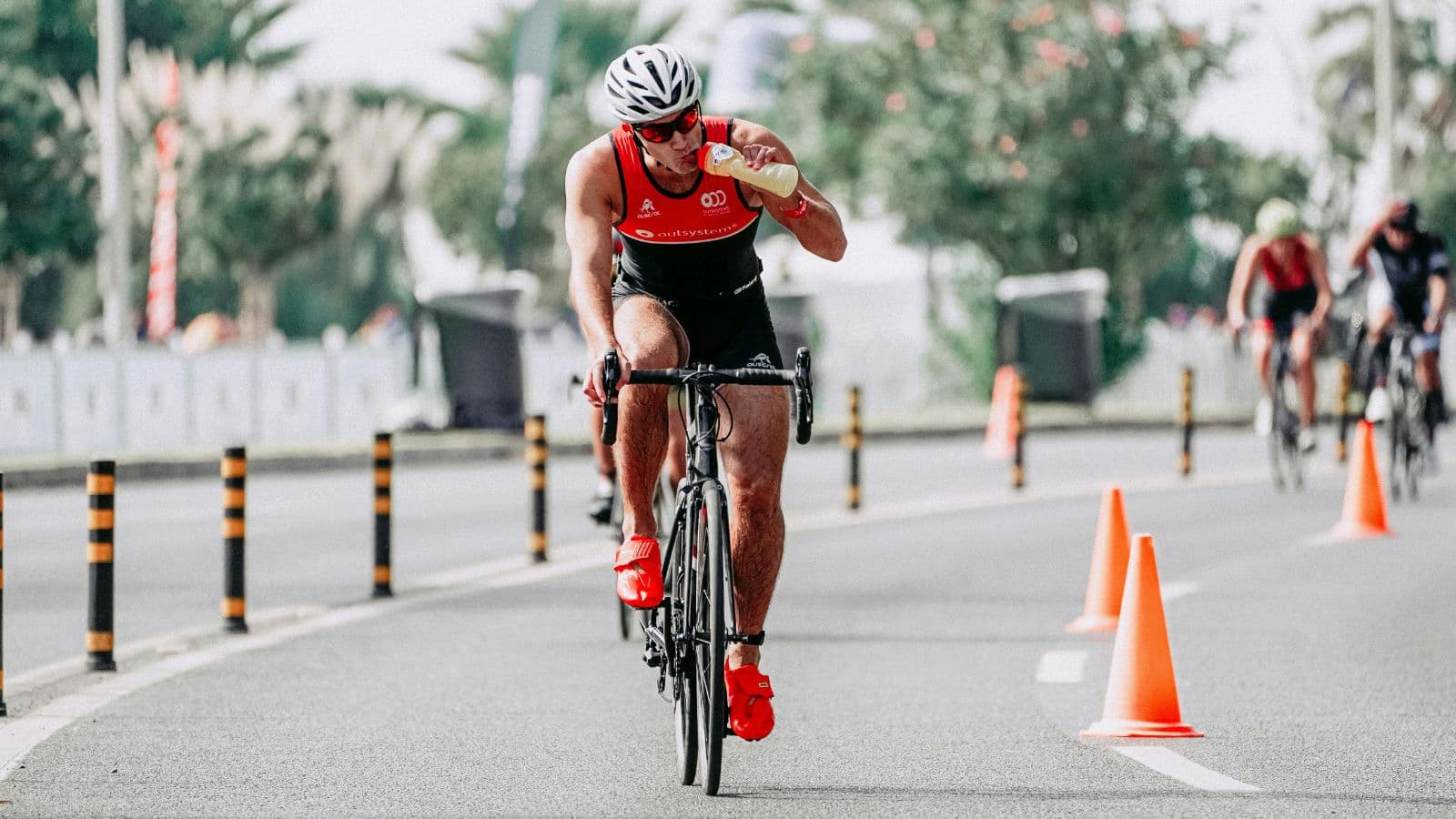
Liquid fuel (sports drinks):
- Easier to consume at high intensity
- Helps with hydration
- Faster absorption
Solid fuel (bars, real food):
- More satisfying on longer rides
- Useful at lower intensities
- Helps prevent hunger
A mix of both is often the most effective strategy. For rides longer than 60 minutes, your body needs energy on the go. Check out our cycling nutrition guide for a detailed plan.
Hydration and electrolytes
Fueling is not just about calories.
Hydration directly affects performance.
What to focus on:
- Drink consistently, not only when thirsty
- Replace fluids lost through sweat
- Include electrolytes, especially in warm conditions
Electrolytes help maintain:
- Fluid balance
- Muscle function
- Performance stability
Matching fueling to ride intensity
Your nutrition should reflect how hard you’re riding.
Steady endurance rides
- Focus on consistent intake
- Use a mix of solid and liquid fuel
- Keep effort controlled
High-intensity or interval rides
- Prioritize easily digestible carbohydrates
- Rely more on liquids and gels
- Reduce reliance on heavy foods
Higher intensity reduces your ability to digest complex foods.
Training your gut
Fueling is a skill, not just a plan.
Your body needs to adapt to consuming carbohydrates during exercise.
How to train it?
- Practice fueling in training rides
- Gradually increase intake
- Test different products and combinations
This reduces the risk of:
- Stomach discomfort
- Bloating
- Missed fueling targets
Never experiment for the first time on race day.
Common fueling mistakes on long rides
Waiting too long to eat
By the time you feel hungry or low on energy, performance is already declining.
Relying only on water
Water alone does not provide energy.
Without carbohydrates, you will eventually run out of fuel.
Eating too much at once
Large, infrequent intake can lead to:
- Digestive discomfort
- Energy spikes and crashes
Small, regular intake works better.
Ignoring electrolytes
Especially in hot conditions, failing to replace sodium leads to:
- Reduced performance
- Increased fatigue
Using untested nutrition
Trying new products mid-ride often results in stomach issues. Stick to what you’ve practiced.
How to structure your fueling plan?
A simple, repeatable approach works best.
Build a routine
- Eat and drink at regular intervals
- Use a mix of fuel sources
- Keep everything easy to access
Prepare before the ride
- Pack enough nutrition
- Plan stops if needed
- Adjust for ride duration and conditions
Running out of fuel mid-ride is avoidable with planning.
Signs your fueling is working
- Steady energy throughout the ride
- Consistent effort without major drops
- No sudden fatigue or cravings
- Strong finish
Practical checklist: what to eat during long rides
- Start fueling early in the ride
- Eat small amounts regularly
- Prioritize carbohydrates
- Combine solid and liquid fuel
- Stay hydrated consistently
- Include electrolytes when needed
- Practice your strategy in training
- Avoid trying new foods on important rides
FAQ
Start early and continue regularly to maintain stable energy levels.
No. Water is essential for hydration, but carbohydrates are needed for energy.
Yes, especially at lower intensities, as long as it’s easy to digest and consume.
Not always, but they become important in longer or hotter conditions.
Yes. Higher intensity requires more easily digestible, quick energy sources.
You should feel consistent energy and be able to maintain effort throughout the ride.