


Cyclists should worry about a bruise after a crash when it is accompanied by severe or worsening pain, rapidly increasing swelling, numbness, difficulty moving a joint, or unusual changes in skin color. These symptoms may indicate a deeper injury that requires medical assessment rather than ordinary bruising. Bruises are common after cycling accidents because the body can strike the road, handlebars, frame, or surrounding objects. Even a relatively minor fall can damage small blood vessels beneath the skin, causing blood to collect in nearby tissues. Most uncomplicated bruises gradually improve without medical treatment. However, the appearance of a bruise does not always reveal the extent of an injury, particularly after a high impact crash.
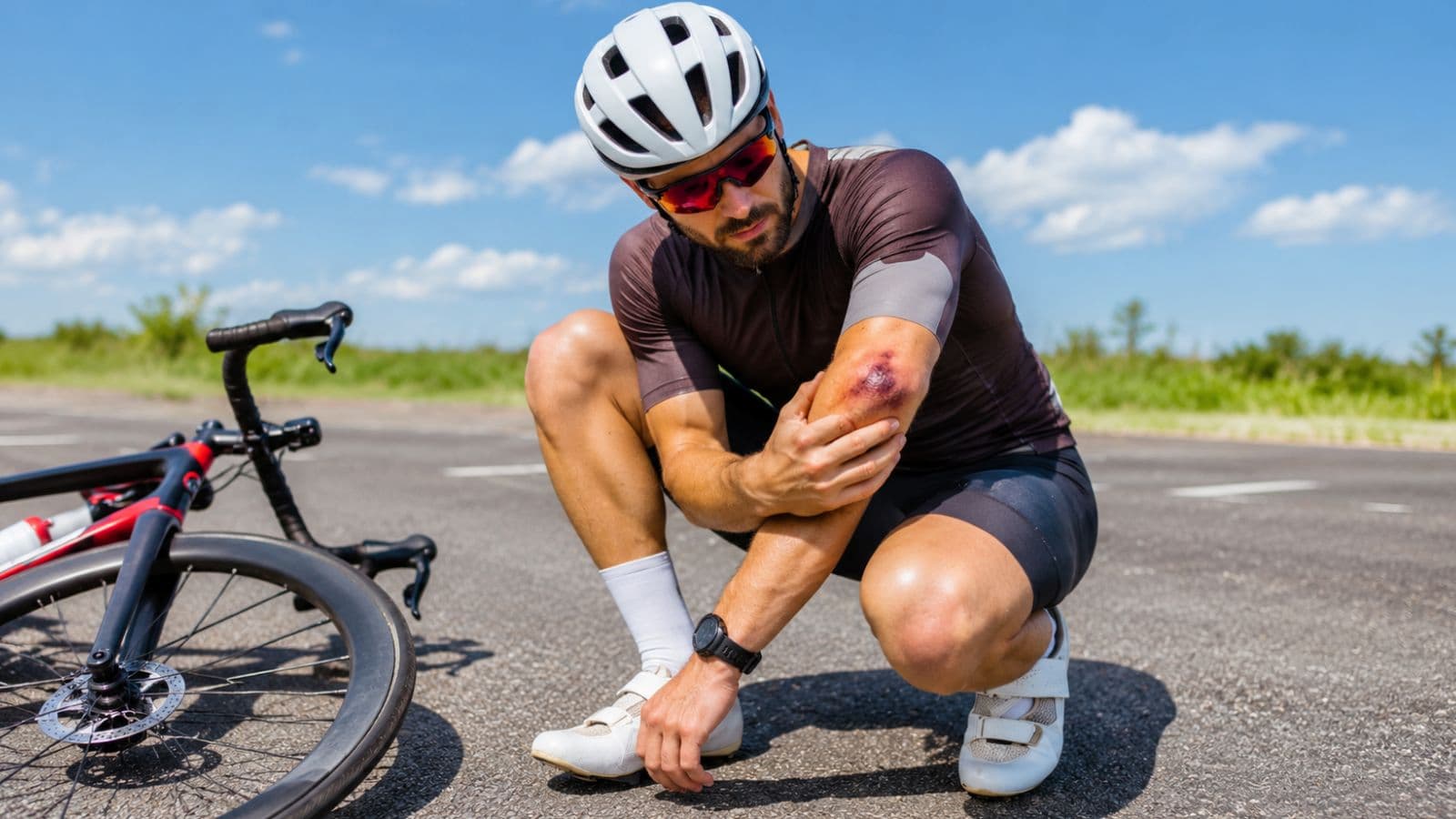
Recognizing concerning symptoms is important because cyclists may be tempted to continue riding despite pain. Understanding when to rest, seek medical attention, or return to training can help prevent a minor injury from becoming a more serious problem.
In Short
- Minor bruises usually improve gradually.
- Severe or worsening pain needs assessment.
- Rapid swelling may indicate deeper bleeding.
- Numbness or weakness is a warning sign.
- Difficulty bearing weight may suggest a fracture.
- Head, chest, and abdominal injuries need extra caution.
- Blood thinner medications increase bleeding concerns.
- Return to cycling only when movement is comfortable and safe.
Understanding Bruising After a Cycling Crash
A bruise, also called a contusion, develops when small blood vessels beneath the skin are damaged. Blood leaks into surrounding tissues, producing discoloration, tenderness, and sometimes swelling.
Cyclists commonly develop bruises around the:
- Knees.
- Thighs.
- Hips.
- Elbows.
- Shoulders.
- Lower legs.
- Arms.
The size and appearance of a bruise depend on the impact, affected tissue, and individual factors. A large bruise is not automatically dangerous, and a small bruise does not necessarily mean the underlying injury is minor.
Normal Bruising and Healing
Uncomplicated bruises generally improve as the body gradually breaks down and absorbs the collected blood.
Common features include:
- Mild or moderate tenderness.
- Localized discoloration.
- Limited swelling.
- Gradually improving discomfort.
- Normal or improving joint movement.
Bruises often change color during healing, progressing through shades of red, purple, blue, green, or yellow. Many minor bruises improve within one to two weeks, although larger or deeper bruises may take several weeks. Healing time varies depending on the injury and individual health.
Warning Signs of a Serious Bruise
Some symptoms suggest that an injury may involve more than superficial bruising.
Seek prompt medical assessment if you notice:
- Rapidly increasing swelling.
- Severe or worsening pain.
- A large, tense, expanding lump.
- Significant difficulty moving a joint.
- Inability to bear weight.
- Numbness or weakness.
- Unexplained extensive bruising.
- Persistent pain that is not improving.
Severe pain with a tense or swollen limb, particularly when accompanied by tingling, weakness, or pain during passive movement, can indicate acute compartment syndrome. This is a medical emergency. Do not attempt to ride through these symptoms.
Bruising Around the Knee
The knee is particularly vulnerable during cycling falls because it may strike the road or bike frame directly. A knee bruise can involve the skin, surrounding muscles, or deeper structures.
Concerning symptoms include:
- Significant joint swelling.
- Difficulty bending or straightening the knee.
- Inability to walk normally.
- A feeling that the knee is unstable.
- Severe pain over the kneecap.
- Persistent pain after the initial injury.
Understanding what is cyclist’s knee and how can you prevent it can help cyclists distinguish common cycling related knee discomfort from broader injury concerns. However, knee pain after a crash should not automatically be attributed to ordinary overuse problems. A direct impact may require assessment for a fracture, ligament injury, or other joint damage.
Deep Bruises and Hematomas
Some cycling crashes cause bleeding deeper within the muscles or surrounding tissues. A hematoma is a localized collection of blood that may create a noticeable lump.
Possible signs include:
- A firm or swollen area.
- Significant tenderness.
- Reduced movement.
- Persistent swelling.
- Increasing pressure or discomfort.
Small hematomas may resolve without intervention, but larger or expanding collections can require medical evaluation. Avoid aggressively massaging a newly injured area, particularly when deeper bleeding is suspected.
Head Injuries and Facial Bruising
Any significant head impact deserves particular attention, even if the visible bruise appears minor. A cyclist can experience a concussion or more serious head injury without obvious external bleeding.
Seek emergency medical care for:
- Loss of consciousness.
- Repeated vomiting.
- Worsening headache.
- Confusion or unusual behavior.
- Seizures.
- Weakness or difficulty walking.
- Increasing drowsiness.
- Vision or speech changes.
Bruising around both eyes or behind the ears after a head injury can be a sign of a serious skull injury and requires emergency evaluation. Do not continue riding if a concussion is suspected. A helmet reduces certain head injury risks but does not eliminate the possibility of concussion.
Chest and Abdominal Bruising
Bruising over the ribs, chest, or abdomen may occur when a cyclist strikes the handlebars or road. These injuries deserve additional caution because internal damage may not be immediately visible.
Warning signs include:
- Significant chest or abdominal pain.
- Difficulty breathing.
- Increasing abdominal tenderness.
- Dizziness or fainting.
- Unusual weakness.
- Blood in urine.
- Rapidly expanding bruising.
Seek emergency care for breathing difficulty, fainting, severe abdominal pain, or other signs of possible internal injury. A bruise over the abdomen should not be judged by appearance alone, especially after a forceful impact.
Bruising While Taking Blood Thinners
Cyclists taking anticoagulant medications may experience more significant bleeding after an injury. Examples include warfarin, apixaban, and rivaroxaban. These medications reduce blood clotting and can increase the risk of serious bleeding after trauma.
If you take blood thinners:
- Seek prompt medical advice after a significant crash.
- Have any head injury assessed urgently, even without obvious symptoms.
- Monitor for expanding bruising.
- Report unusual swelling or pain.
- Do not stop prescribed medication without medical guidance.
A minor looking injury can sometimes involve more bleeding than expected.
Managing a Minor Bruise at Home
For a minor bruise without concerning symptoms, basic care can help manage discomfort during the early recovery period.
Rest and Activity Modification
Reduce activities that cause pain or place pressure on the injured area. Avoid strenuous cycling until movement is comfortable.
Cold Compresses
Apply a cold pack wrapped in a towel for approximately 10 to 20 minutes at a time. Do not place ice directly against the skin.
Gentle Compression
A comfortable elastic wrap may help control mild swelling when appropriate. Avoid tight compression that causes tingling, numbness, or increased pain.
Elevation
Elevating an injured arm or leg may help manage swelling.
Pain Relief
Some over the counter pain relievers may be appropriate, depending on your health and medications. Ask a healthcare professional before using anti inflammatory medicines when significant bleeding or a deeper injury is possible.
Returning to Cycling After a Bruise
The appropriate return to cycling depends on the location and severity of the injury. A small bruise on the arm may have little effect on riding, while a deep thigh or knee bruise can interfere with pedaling and bike control.
Before returning, check whether you can:
- Walk comfortably.
- Move the affected joint normally.
- Pedal without significant pain.
- Maintain stable bike control.
- Brake and steer safely.
- Perform normal movements without worsening symptoms.
Understanding how to increase cycling volume without the risk of injury can help cyclists rebuild their training gradually after time away. Start with an easy, short ride rather than immediately returning to demanding intervals or long distances. If pain or swelling increases, stop and reassess.
Preventing Injuries During Cycling Crashes
Not every crash can be prevented, but better bike handling and preparation can reduce certain risks.
Useful precautions include:
- Wearing a properly fitted helmet.
- Maintaining appropriate tire pressure.
- Checking brakes regularly.
- Practicing cornering skills.
- Reducing speed on unfamiliar roads.
- Maintaining safe distances from other riders.
- Adjusting riding technique to weather conditions.
Understanding how to improve cornering skills on a road bike for beginners can help cyclists develop better control through turns. Confidence should develop through gradual practice rather than unnecessary risk taking.
Bike Safety Checks After a Crash
A crash can damage equipment even when the cyclist appears relatively uninjured.
Before riding again, inspect:
- Helmet condition.
- Frame and fork.
- Handlebars and stem.
- Brake function.
- Wheel alignment.
- Tires and rims.
- Pedals and crankset.
Understanding what you should check on your bike before every ride can help cyclists establish a reliable inspection routine. Replace a helmet that has sustained an impact according to the manufacturer’s guidance. If you suspect structural damage, have the bike inspected by a qualified mechanic.
Improving Bike Handling Confidence
Some cyclists become hesitant after experiencing a crash. This response is understandable, particularly when the accident involved a fast descent or loss of control.
A gradual return can include:
- Riding on quiet roads.
- Practicing controlled braking.
- Rebuilding cornering confidence.
- Avoiding demanding routes initially.
- Riding with a supportive partner.
Understanding how to overcome fear on fast cycling descents can help cyclists rebuild confidence without rushing into challenging situations. Do not return to technical riding until both physical recovery and bike handling feel reliable.
Recovery and Training Adjustments
Cyclists sometimes worry about losing fitness while recovering from a crash. However, returning too quickly can aggravate injured tissues and prolong recovery.
Focus on:
- Adequate sleep.
- Appropriate nutrition.
- Comfortable movement.
- Gradual training progression.
- Monitoring swelling and pain.
- Following medical instructions.
Understanding how much sleep do cyclists need for recovery can help athletes prioritize rest while healing. A few missed workouts are usually less important than allowing an injury to recover appropriately.
Bruise Severity and Recommended Action
| Symptoms | Recommended response |
|---|---|
| Mild tenderness and small bruise | Monitor and use basic home care |
| Bruise gradually improving | Resume normal activity as tolerated |
| Persistent pain or swelling | Arrange medical assessment |
| Inability to bear weight | Seek urgent medical evaluation |
| Rapidly expanding swelling | Seek urgent or emergency assessment |
| Severe limb pain with numbness | Seek emergency care |
| Head injury with neurological symptoms | Seek emergency care |
| Chest pain or breathing difficulty | Seek emergency care |
These categories are general guidance and cannot replace a clinical examination.
Common Mistakes
- Ignoring worsening pain.
- Continuing to ride with significant swelling.
- Massaging a deep bruise aggressively.
- Assuming every bruise is harmless.
- Overlooking head injury symptoms.
- Returning to hard training too early.
- Ignoring possible bike damage.
- Delaying medical care after a serious crash.
Practical Tips
- Assess the injury before riding again.
- Monitor swelling and pain.
- Use cold packs for minor bruising.
- Avoid pressure on the injured area.
- Seek help for concerning symptoms.
- Check your helmet and bike.
- Return to riding gradually.
- Follow medical advice when needed.
Actionable Takeaways
- Most minor bruises improve with time.
- Rapid swelling or severe pain needs attention.
- Head and abdominal injuries require extra caution.
- Do not ride through significant symptoms.
- Prioritize recovery before returning to cycling.
FAQs
Minor bruises often improve within one to two weeks, while deeper bruises may require several weeks.
A bruise may indicate a more serious injury when accompanied by severe pain, rapidly increasing swelling, numbness, weakness, or difficulty moving.
Yes. Significant impacts to the chest, abdomen, head, or other areas can cause internal injuries even when external bruising is limited.
Only if the injury is minor and you can pedal and control the bike comfortably. Significant swelling, instability, or difficulty bearing weight requires medical assessment.
Yes. Bruises commonly change color during healing. However, rapidly expanding discoloration or increasing swelling should be evaluated.
Yes. A hematoma may create a swollen or firm area beneath the skin. Large, painful, or expanding lumps require medical assessment.
Avoid aggressive massage during the early stages of injury, especially when deeper bleeding or a hematoma is possible.
A minor bruise may allow comfortable riding, but deeper thigh injuries can affect pedaling. Avoid riding if pain, swelling, or movement limitations are significant.