For many cyclists, climbing earns the glory, but descending is where confidence, technique and bike handling make the biggest difference. A skilled descender can gain valuable time without producing extra power, while an uncertain rider often loses speed, wastes energy and increases the risk of mistakes. Improving downhill cycling isn’t about taking unnecessary risks. It’s about learning how to position your body, brake effectively and choose smooth lines that maximize both speed and safety.
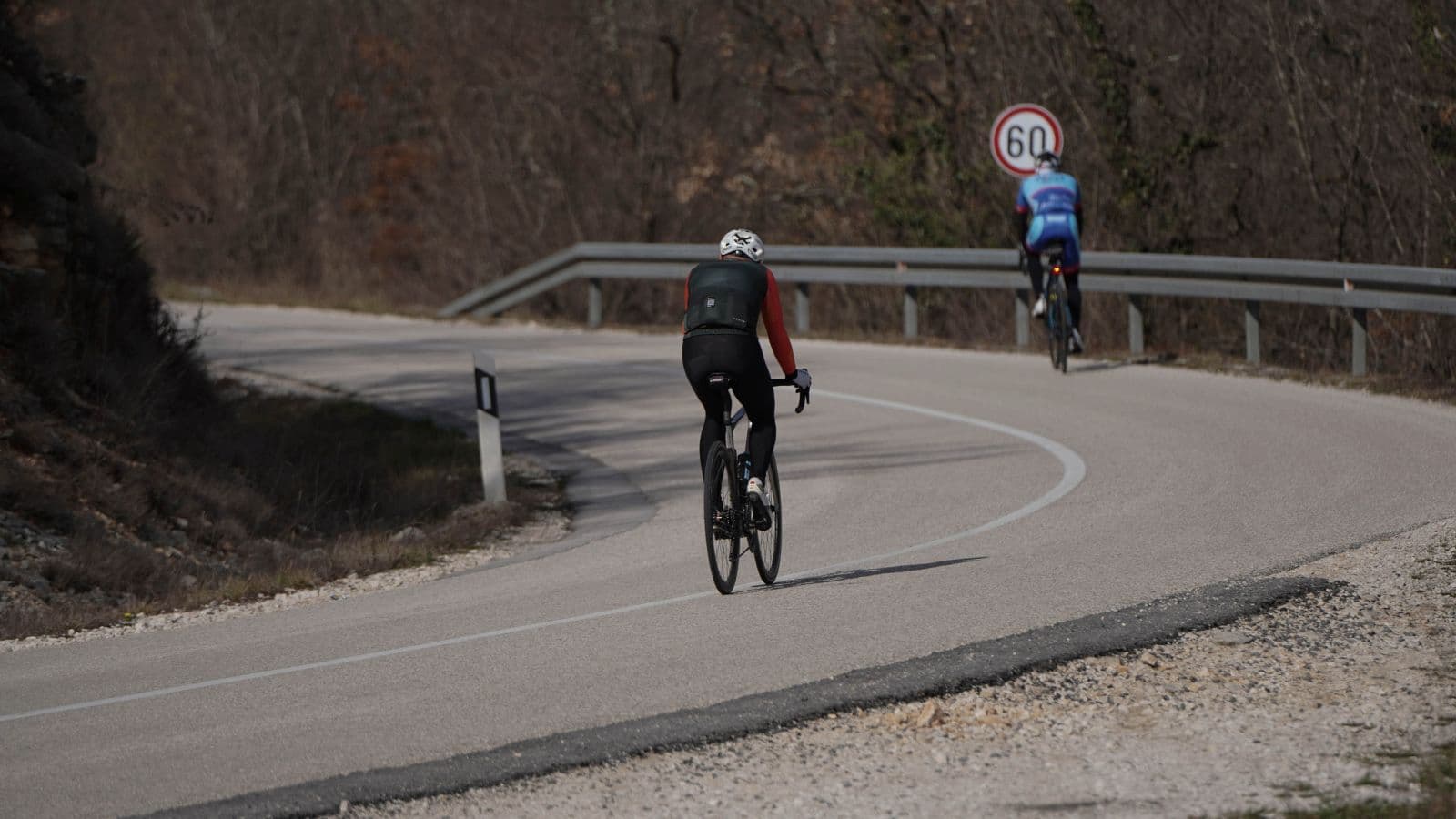
Whether you’re tackling mountain passes, technical descents or rolling country roads, better descending skills can transform your cycling experience.
In Short
- Stay relaxed on the bike.
- Look well ahead through corners.
- Brake before entering turns.
- Use a balanced riding position.
- Practise smooth cornering.
- Build confidence gradually.
Why Descending Matters?
Many cyclists focus almost entirely on climbing fitness.
However, better descending can:
- Save valuable race time.
- Reduce unnecessary braking.
- Improve confidence.
- Conserve energy.
- Increase overall riding efficiency.
Technical ability often matters just as much as physical fitness on challenging terrain.
Use the Correct Body Position
Good body position improves both stability and control.
Aim to:
- Bend your elbows slightly.
- Relax your shoulders.
- Keep your hips stable.
- Lower your centre of gravity.
- Maintain light pressure on the handlebars.
Avoid locking your arms, as this reduces your bike’s ability to absorb road vibrations.
Look Through the Corner
Your bike naturally follows your vision.
Instead of staring at the road immediately in front of your wheel:
- Look toward the exit of the corner.
- Scan ahead continuously.
- Anticipate hazards early.
- Plan your line before turning.
This allows smoother steering and better balance.
Brake Before the Corner
One of the biggest descending mistakes is braking heavily while already leaning into a corner.
Instead:
- Reduce speed before turning.
- Release the brakes smoothly.
- Lean naturally through the bend.
- Accelerate when exiting.
Learning how to descend faster and safer on a road bike develops this essential skill.
Improve Your Cornering Technique
Smooth cornering allows you to maintain speed safely.
Focus on:
- Wide entry.
- Smooth apex.
- Controlled exit.
- Stable body position.
Practicing how to improve cornering skills on a road bike for beginners builds confidence on every descent.
Stay Relaxed
Tension reduces control.
During descents:
- Relax your grip.
- Keep your shoulders loose.
- Breathe steadily.
- Let the bike move naturally beneath you.
Relaxed riders generally react more smoothly to bumps and changing road surfaces.
Build Confidence Gradually
Confidence develops through repetition, not by forcing yourself into situations beyond your ability.
Choose descents that:
- Have good visibility.
- Feature smooth surfaces.
- Have gentle corners.
- Carry little traffic.
Working on how to improve your confidence on technical bike courses provides a structured approach to becoming a better descender.
Learn to Brake Smoothly
Good braking is about control, not stopping as quickly as possible.
Aim to:
- Apply both brakes progressively.
- Brake firmly in a straight line.
- Ease off before entering corners.
- Avoid grabbing the brakes suddenly.
Smooth braking keeps your tyres gripping the road and makes descents feel much more predictable.
Choose the Best Line
Every corner has an ideal line that allows you to maintain control while reducing unnecessary braking.
In general:
- Enter wide.
- Aim for a smooth apex.
- Exit wide when safe.
- Avoid sudden steering inputs.
Always stay within your lane and never cross the centre line on public roads.
Improve Bike Handling Skills
Confidence on descents comes from better overall bike control.
Practise:
- Slow-speed balance.
- Emergency braking.
- Cornering drills.
- Weight shifting.
- Riding over different road surfaces.
Building how to ride safely in a cycling group also improves bike awareness and handling, making you more confident when descending alongside other riders.
Learn to Shift Your Weight
Body weight plays a major role in stability.
During descents:
- Keep your weight centred.
- Apply pressure through your feet.
- Stay light on the handlebars.
- Let the bike lean beneath you.
Avoid sitting rigidly upright, as this reduces stability at higher speeds.
Stay Alert to Road Conditions
Road surfaces change constantly.
Watch for:
- Wet patches.
- Loose gravel.
- Potholes.
- Painted road markings.
- Fallen leaves.
Adjust your speed before reaching hazards rather than reacting suddenly. If you’re riding in poor weather, how to cycle safely in the rain provides additional techniques for maintaining grip and control.
Build Leg and Core Strength
A strong body helps you stay stable on technical descents.
Focus on strengthening:
- Core muscles.
- Glutes.
- Legs.
- Lower back.
Including what strength training should cyclists do to ride faster supports better control while reducing fatigue on longer descents.
Ride Within Your Limits
Confidence should develop gradually.
Never descend faster than:
- Your skill level.
- Road visibility.
- Weather conditions.
- Traffic allows.
The fastest descenders are often the smoothest, not the most aggressive.
Practise Frequently
Descending is a technical skill that improves through repetition.
Choose familiar roads where you can safely practise:
- Body position.
- Cornering.
- Braking.
- Looking ahead.
- Smooth line selection.
Even short practice sessions can significantly improve your confidence over time.
Common Mistakes
- Looking directly in front of the front wheel.
- Braking heavily mid-corner.
- Locking your arms.
- Sitting too upright.
- Gripping the handlebars too tightly.
- Descending beyond your ability.
- Ignoring changing road conditions.
- Looking at hazards instead of your exit line.
Practical Tips
- Lower your centre of gravity.
- Look through every corner.
- Brake before turning.
- Relax your upper body.
- Practise smooth cornering regularly.
- Build confidence gradually.
- Stay aware of road conditions.
- Ride within your limits.
Actionable Takeaways
Improving downhill cycling is about developing confidence through better technique rather than relying on bravery. Smooth braking, good body position, effective cornering and relaxed riding all allow you to descend faster while maintaining safety and control. The more you practice these skills on suitable roads, the more natural they become. Over time, you’ll waste less energy, carry more speed through descents and enjoy every ride with greater confidence.
FAQs
Practise on quiet roads with gentle descents, improve your braking technique and gradually increase your speed as your confidence grows.
Ideally, complete most of your braking before entering the corner, then release the brakes smoothly as you lean into the turn.
Always look through the corner towards where you want the bike to go rather than directly in front of your front wheel.
Fear often comes from limited experience or uncertainty about bike handling. Regular practice helps build confidence.
Keep a light but secure grip. Holding the bars too tightly reduces your ability to react smoothly to bumps and corners.
Practice entering corners at the correct speed, looking ahead and following a smooth line through the bend.
Many cyclists feel more stable descending in the drops because it lowers the centre of gravity and improves braking control, but use whichever position feels safest while you develop confidence.