


A flying mount in cycling is a technique where a rider moves alongside a bicycle, places their hands on the handlebars, and jumps or hops onto the saddle while the bike is rolling. It is primarily used in cyclocross racing and sometimes in triathlon transitions, where quickly getting back onto the bike can save valuable seconds. Unlike a conventional mount, where the cyclist steps over the frame before starting to pedal, a flying mount combines running, jumping, balancing, and forward movement. This makes it considerably more demanding than simply getting onto a stationary bicycle.
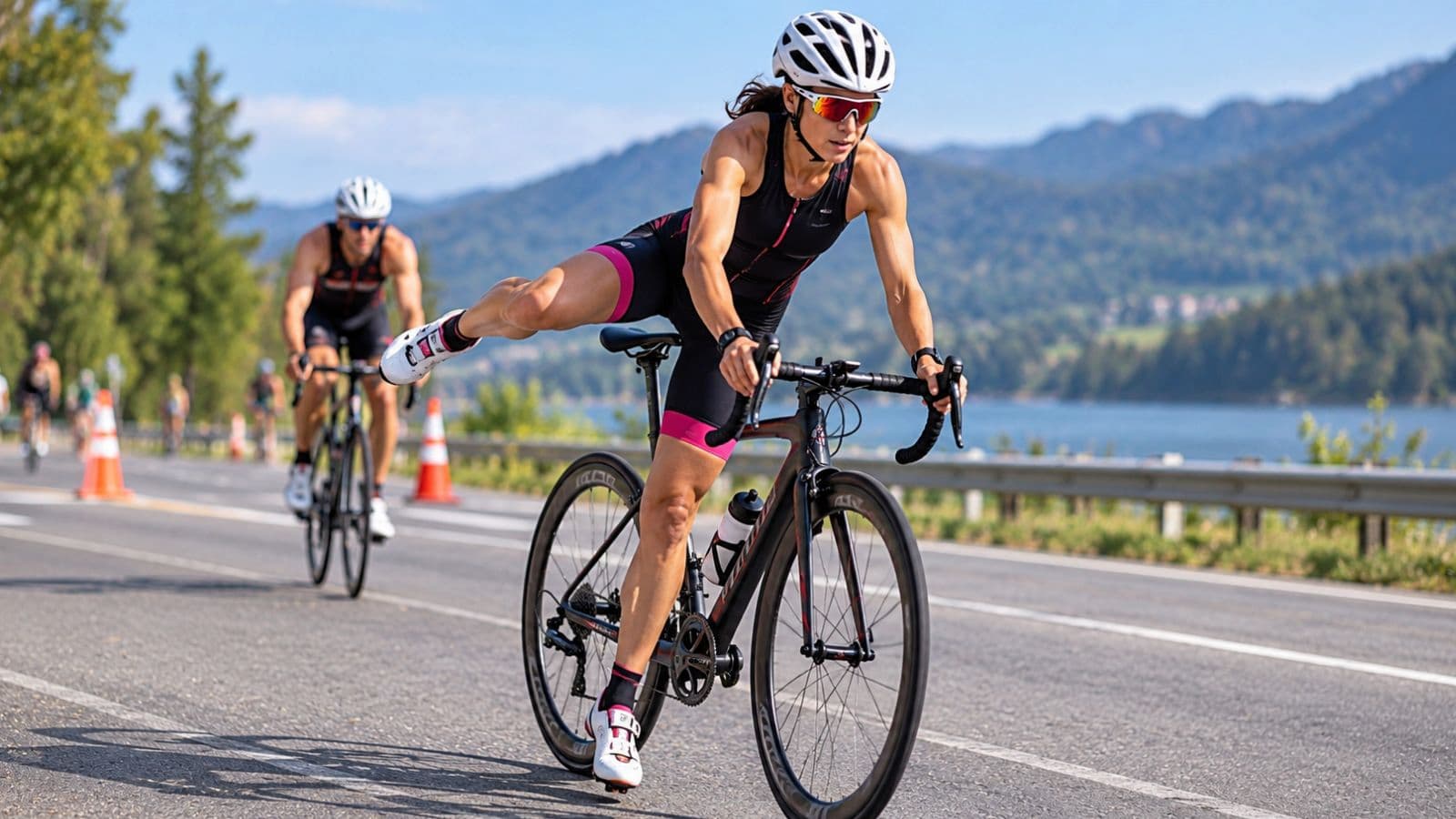
Experienced riders may use the technique after running over obstacles, carrying their bikes, or leaving a transition area. Understanding how it works, where it is useful, and the risks involved can help you decide whether it belongs in your cycling skill development.
In Short
- A flying mount involves getting onto a rolling bicycle.
- It is commonly used in cyclocross and triathlon.
- The technique combines running, hopping, and balance.
- It can save time during racing.
- Incorrect execution increases crash risk.
- Beginners should master conventional mounting first.
- Practice requires a safe, open environment.
- Smooth control matters more than speed.
- Flying mounts are unnecessary for most recreational rides.
- Race rules and designated mounting areas must be respected.
How Does a Flying Mount Work?
During a flying mount, the cyclist runs beside the bike while maintaining control of the handlebars. The rider then makes a controlled hop, bringing the body over the saddle and landing in a stable riding position.
The basic movement includes:
- Running alongside the bicycle.
- Holding the handlebars securely.
- Maintaining a straight rolling line.
- Lifting the body over the saddle.
- Settling onto the saddle.
- Establishing pedal contact and riding away.
The movement should be controlled rather than a forceful jump directly downward onto the saddle. A flying mount requires coordination between forward momentum, body position, and bicycle stability.
Where Are Flying Mounts Used?
Cyclocross Racing
Cyclocross races often include barriers, stairs, steep banks, and other obstacles that require riders to dismount. After clearing an obstacle, experienced cyclists may remount while moving to minimize lost momentum. This makes the flying mount a recognizable cyclocross skill.
Triathlon Transitions
Some triathletes use a flying mount after leaving the first transition area, known as T1. The technique allows riders to get onto their bicycles without fully stopping. However, athletes must mount only after the designated mount line and follow the event’s rules.
Recreational Cycling
Flying mounts provide little practical advantage during ordinary road cycling. A conventional mount is generally easier, more predictable, and safer in everyday riding conditions.
Flying Mount vs Conventional Mount
Both methods allow cyclists to begin riding, but their technical demands differ.
| Feature | Flying mount | Conventional mount |
|---|---|---|
| Bicycle movement | Rolling | Usually stationary or nearly stationary |
| Skill level | Advanced | Beginner friendly |
| Coordination | High | Relatively low |
| Potential time saving | Small but useful in some races | Less important |
| Crash risk | Higher if poorly executed | Generally lower |
| Best use | Cyclocross and selected race transitions | Everyday cycling and beginners |
For most riders, the conventional method is sufficient. Understanding what cycling equipment worries are most common among beginners can help new cyclists address basic confidence and handling concerns before attempting advanced techniques.
Why Do Cyclists Use Flying Mounts?
The main advantage is reducing time spent getting back onto the bicycle. In cyclocross, riders may dismount and remount repeatedly during a race. A smooth flying mount can help preserve momentum and reduce unnecessary hesitation.
Potential benefits include:
- Faster remounting after obstacles.
- Smoother transitions between running and riding.
- Reduced time spent stationary.
- Improved confidence with advanced bike handling.
However, these advantages depend on reliable execution. An uncontrolled attempt may lose more time than a conventional mount.
Is a Flying Mount Safe for Beginners?
A flying mount is not generally recommended as a first cycling skill. Beginners should become comfortable with starting, stopping, balancing, braking, and controlling their bicycles before considering advanced mounting techniques.
The main risks include:
- Missing the saddle.
- Landing heavily on sensitive areas.
- Losing handlebar control.
- Catching clothing or feet on the bicycle.
- Veering into obstacles or other riders.
- Falling while trying to establish pedal contact.

Learning how to improve your confidence on technical bike courses can help develop the broader handling skills needed before attempting more complex movements.
Skills to Master Before Trying a Flying Mount
A cyclist considering this technique should already be comfortable controlling a bicycle at low speeds.
Important foundations include:
- Starting and stopping smoothly.
- Walking and running beside a bicycle.
- Maintaining a straight line.
- Controlling speed without sudden braking.
- Mounting normally from either side when appropriate.
- Riding confidently on uneven surfaces.
Practicing basic handling skills can be more valuable than rushing toward an advanced mount. Understanding what cycling drills help improve bike technique can help cyclists build coordination and control progressively.
How to Practice a Flying Mount Safely?
Flying mounts should be learned progressively, ideally with an experienced cyclocross coach.
Start With a Conventional Mount
Practice mounting and dismounting smoothly while the bicycle is stationary. Ensure you can begin riding without wobbling or looking down excessively.
Walk Beside the Bicycle
Move alongside the bike while maintaining control of the handlebars. Practice keeping the bicycle straight and stable.
Learn a Controlled Moving Remount
Before attempting a flying mount, practice a slower, conventional remount in a safe, open area. This develops coordination between walking, positioning, and beginning to pedal.
Develop the Hop Separately
Under qualified supervision, learn the movement without rushing or landing heavily. The objective is controlled positioning over the saddle, not jumping as high or as fast as possible.
Progress Only When Consistent
Increase speed only after repeated successful attempts at lower speeds. Stop practicing when tired or when control becomes inconsistent. Never practice on public roads, in traffic, or near pedestrians.
Choose a Safe Practice Environment
A suitable practice area should be:
- Open and free from traffic.
- Clear of obstacles.
- Relatively flat.
- Predictable under the tires.
- Away from other riders.
- Large enough for controlled stopping.
Grass may reduce the consequences of some falls, but uneven or slippery grass can introduce additional hazards. Wear a properly fitted helmet and suitable cycling footwear. For riders interested in cyclocross or gravel events, 10 things you should know before your first gravel race provides useful context for preparing equipment and handling skills, although gravel racing does not generally require flying mounts.
Does Bike Setup Affect Flying Mounting?
Bike size, saddle height, frame clearance, and pedal system can influence how difficult a flying mount feels. A bicycle that is poorly fitted may be harder to control during mounting.
Check that:
- The saddle is securely fastened.
- The handlebars are stable.
- The pedals function correctly.
- Clothing cannot catch on components.
- The bicycle is mechanically sound.
Understanding what you should check on your bike before every ride helps ensure basic equipment safety before practicing advanced techniques. Avoid lowering or changing your saddle dramatically just to make a flying mount easier unless the adjustment is appropriate for your riding position.
Can a Flying Mount Improve Race Performance?
A flying mount can save a small amount of time in events involving repeated remounts. However, its effect depends on the course and the rider’s skill. For example, a cyclocross rider who remounts several times may benefit more than a road cyclist who mounts only once. For most recreational racers, improvements in fitness, cornering, and pacing offer greater benefits. Understanding how to improve cornering skills on a road bike for beginners can help cyclists develop handling abilities that apply to a much wider range of riding situations.
Flying Mounts and Race Rules
Cycling events may have specific rules governing where and how riders can mount their bicycles. In triathlon, riders must respect the mount line and instructions from officials. In cyclocross, riders must also follow applicable course and competition rules. Never attempt a flying mount in a crowded area if doing so could endanger others.
Understanding how to ride safely in a group reinforces the importance of predictable movements when riding around competitors.
Should You Learn a Flying Mount?
Whether a flying mount is worthwhile depends on your cycling goals.
| Rider type | Recommendation |
|---|---|
| Beginner road cyclist | Use conventional mounting |
| Recreational cyclist | Usually unnecessary |
| Gravel cyclist | Optional, rarely essential |
| Beginner cyclocross racer | Learn basic remounting first |
| Experienced cyclocross racer | Potentially useful |
| Competitive triathlete | Optional, depending on rules and skill |
If your main goal is improving general cycling performance, prioritize endurance, technique, and consistency. Understanding how to get faster at cycling can help identify training improvements that matter more than saving a few seconds during mounting.
Common Mistakes
- Attempting a flying mount before mastering basic handling.
- Jumping too high or landing heavily.
- Looking down instead of maintaining direction.
- Practicing at excessive speed.
- Using unsuitable terrain.
- Ignoring pedal position.
- Attempting the technique while fatigued.
- Practicing near traffic or other riders.
- Assuming every race allows the technique.
Practical Tips
- Learn conventional mounting first.
- Practice basic bicycle control regularly.
- Use a quiet, open training area.
- Wear a helmet and suitable footwear.
- Seek coaching for advanced remounting.
- Prioritize smoothness over speed.
- Inspect your bicycle before practicing.
- Stop if balance or control deteriorates.
- Follow event specific mounting rules.
Actionable Takeaways
- A flying mount is an advanced racing technique, not an essential cycling skill.
- It is most useful in cyclocross and selected triathlon transitions.
- Beginners should prioritize safe, conventional mounting.
- Learn progressively and only attempt the technique when confident and properly supervised.
FAQs
It can be challenging because it requires coordination, balance, timing, and confident bicycle handling.
They are uncommon in standard road cycling and offer little practical benefit during ordinary rides.
They use them to remount quickly after obstacles and reduce time lost during transitions between running and cycling.
Beginners should first master conventional mounting and basic bike control. Advanced attempts are best learned with qualified instruction.
It carries additional risks, including missed saddle landings, loss of balance, and crashes.
No specific pedal system is required, but riders must understand how to establish secure pedal contact safely.
Sometimes. Athletes must follow event rules and mount only in permitted areas.
Usually not. Conventional mounting is more practical and safer for most recreational cycling situations.