Cyclists naturally associate riding faster with becoming fitter, but training doesn’t work quite that simply. If every ride becomes a hard effort, fatigue can accumulate faster than your body can recover, eventually reducing the quality of your important workouts and making consistent training difficult. Slower cycling sessions provide a different training stimulus. They allow you to spend substantial time working aerobically without creating the same fatigue as repeated threshold or high-intensity workouts. For endurance cyclists in particular, this aerobic foundation is essential for maintaining performance over longer distances.
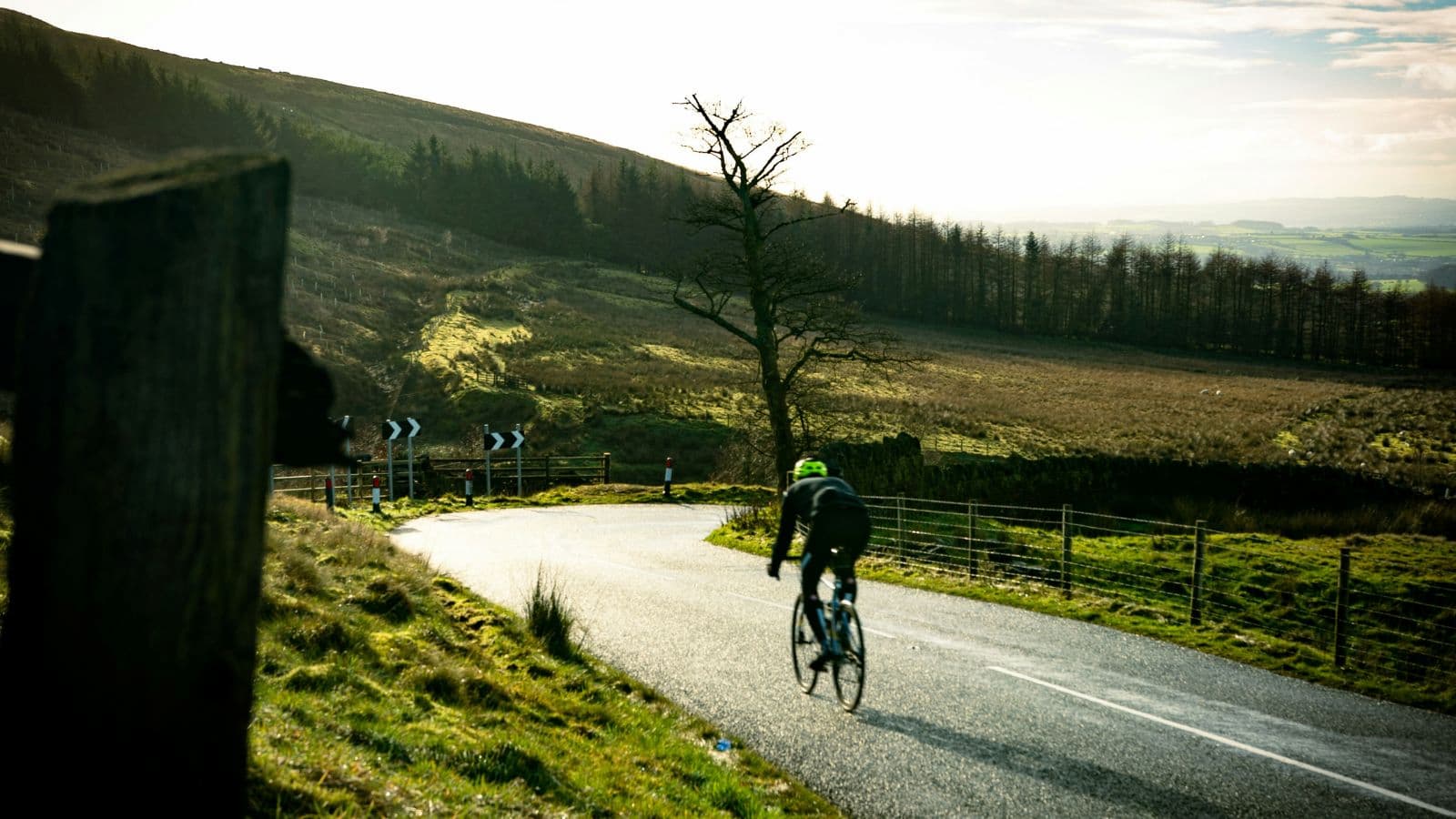
Easy riding isn’t wasted training or simply something you do between “real” workouts. When used deliberately, slower sessions can build endurance, support recovery and make harder training more effective.
In Short
- Slower cycling develops aerobic endurance.
- Easy rides create less fatigue than hard sessions.
- They help cyclists accumulate sustainable training volume.
- Slower sessions can support recovery between hard workouts.
- They improve endurance needed for long rides.
What Is a Slower Cycling Session?
A slower session is a ride performed at a controlled intensity that you can sustain comfortably.
Depending on the purpose of the ride, you should generally be able to:
- Breathe steadily.
- Speak comfortably.
- Maintain consistent pedalling.
- Avoid significant muscular strain.
- Finish without feeling exhausted.
The exact speed isn’t important. A cyclist riding slowly into a headwind may actually be working harder than someone travelling much faster with a tailwind. That’s why easy cycling is better defined by intensity than speed.
Why Does Cycling Slowly Improve Fitness?
Your aerobic system provides most of the energy required during endurance cycling. Regular lower intensity riding encourages adaptations that improve your ability to sustain prolonged exercise. These adaptations provide the foundation that supports harder training later. Cyclists beginning structured endurance development can use how do you build an aerobic base for cycling to understand why aerobic fitness should be developed consistently rather than relying entirely on hard intervals.
Slow Cycling Helps Build Endurance
Long distance cycling requires the ability to produce manageable power repeatedly for several hours. You don’t develop this ability only through short, intense workouts.
Longer controlled rides allow you to practise maintaining:
- Sustainable effort.
- Consistent cadence.
- Comfortable posture.
- Appropriate nutrition.
- Steady concentration.
This is particularly important when preparing through how to build endurance for long cycling races, where durability matters as much as short-term power.
Easy Training Allows More Sustainable Volume
Training volume can contribute substantially to cycling development, but increasing volume also increases fatigue. If every additional hour is ridden hard, the workload can quickly become difficult to recover from. Lower intensity sessions allow cyclists to accumulate more riding time without making every hour equally stressful. This doesn’t mean you should suddenly double your weekly riding. Volume still needs to increase progressively.
Slower Sessions Help Protect Hard Workouts
Suppose your training week contains an important interval session on Thursday. If Wednesday’s easy ride turns into an unplanned race against your training partners, you may arrive at Thursday already fatigued.
The result can be:
- Lower interval power.
- Poorer technique.
- Reduced motivation.
- Inability to complete the planned workout.
Easy days help create separation between demanding sessions. That separation allows hard workouts to actually be hard when they need to be.
Zone 2 Is Commonly Used for Aerobic Cycling
Many cyclists use training zones to control slower endurance sessions. Zone 2 is commonly associated with steady aerobic riding that can be sustained for relatively long periods. However, training zones aren’t perfectly universal, and the exact boundaries depend on how they were established. Understanding what is zone 2 cycling can help you use intensity zones more appropriately instead of assuming every easy ride must hit one exact power or heart-rate number.
Slow Doesn’t Mean Completely Effortless
A slower endurance ride and a recovery ride aren’t necessarily identical. A recovery ride may be extremely light and relatively short. An aerobic endurance session can still involve meaningful work, particularly when it lasts several hours. The important distinction is that you’re controlling the intensity enough to avoid turning the session into threshold or high-intensity training.
Avoid the Moderate Intensity Trap
One common mistake is riding almost every session at a moderately difficult intensity. These rides may feel productive because they’re neither very easy nor extremely hard. However, repeatedly riding too hard on easy days can accumulate fatigue without providing the focused stimulus of a properly structured high-intensity workout.
Learning what is the difference between zone 2 and high intensity cycling helps clarify why different training intensities should have different purposes.
Slower Riding Supports Recovery
Not every easy ride needs to create a major fitness stimulus. Sometimes the purpose is simply to maintain movement while allowing your body to recover from harder training.
A recovery-oriented ride can:
- Increase gentle movement.
- Maintain cycling routine.
- Provide low-stress pedalling.
- Help you mentally reset between demanding sessions.
If your legs feel worse and worse throughout a supposed recovery ride, continuing simply to complete a predetermined distance may not be useful.
Easy Days Make Consistency Easier
Cycling fitness develops through repeated training over weeks, months and years. Constantly training hard can make individual sessions impressive while making the overall program unsustainable. A more controlled approach allows you to keep showing up. This is why consistency is more important than intensity for cycling success is directly connected to slower training. The ability to repeat manageable training regularly often matters more than occasionally producing enormous workouts.
Slower Sessions Develop Fatigue Resistance
Long rides teach your body to continue producing steady power after several hours of cycling.
That durability becomes increasingly important for:
- Gran fondos.
- Sportives.
- Century rides.
- Gravel races.
- Stage events.
- Long road races.
You may be able to produce excellent power for 20 minutes while fresh but still struggle after four hours. Longer aerobic riding helps address that difference.
You Can Practise Pacing on Easy Rides
A slower ride provides an excellent opportunity to learn restraint. Instead of attacking every climb or chasing every cyclist ahead, practice maintaining a controlled effort. This teaches you to avoid wasting energy early in long events. The principles in how to pace a long cycling ride properly are easier to develop when you regularly practice holding sustainable effort in training.
Slower Riding Can Improve Pedalling Awareness
Hard efforts leave relatively little attention available for technique.
During easier rides, you can pay more attention to:
- Cadence.
- Gear selection.
- Upper-body relaxation.
- Cornering.
- Smooth power application.
This doesn’t mean obsessing over every pedal stroke. Instead, use easier riding to develop comfortable movement that becomes automatic when intensity increases.
Cadence Still Matters During Easy Riding
Riding slowly doesn’t necessarily mean grinding a very large gear at low cadence. Choose gearing that allows comfortable, sustainable pedaling.
Cadence naturally varies according to:
- Terrain.
- Fitness.
- Bike type.
- Speed.
- Personal preference.
Understanding cycling cadence explained can help you avoid confusing low speed with the need to pedal unusually slowly.
Easy Training Helps You Learn Your Body
When every workout is extremely hard, it can become difficult to distinguish normal fatigue from excessive fatigue.
Controlled rides make it easier to notice:
- Unusually heavy legs.
- Elevated effort.
- Poor motivation.
- Unexpectedly high heart rate.
- Difficulty producing normal power.
These signs can help you decide whether the next hard session should proceed as planned.
Heart Rate Can Help Control Intensity
Heart rate provides another way to assess slower rides.
However, heart rate is influenced by factors including:
- Heat.
- Hydration.
- Fatigue.
- Caffeine.
- Stress.
Don’t panic if heart rate occasionally differs from your usual number. Using how can heart rate zones improve cycling speed and fitness can help you combine heart rate with perceived effort rather than treating it as an absolute command.
Power Can Also Guide Slower Sessions
A power meter provides immediate information about how much mechanical power you’re producing. This can be especially useful on rolling terrain where speed constantly changes. For example, you can reduce power on climbs rather than automatically pushing hard simply because the road goes uphill. However, power numbers shouldn’t prevent you from responding to fatigue. An unusually difficult effort may be a reason to reduce the workload even if your training plan specifies a particular number.
Slow Cycling Isn’t About Average Speed
Average speed is heavily influenced by:
- Wind.
- Terrain.
- Traffic.
- Road surface.
- Bike choice.
- Group riding.
Two rides with identical average speeds can create very different physiological demands. This is why judging easy sessions according to average speed can be misleading. Focus on effort rather than trying to maintain a speed that looks impressive on your training platform.
Group Rides Can Make Easy Training Difficult
Group rides often contain:
- Surges.
- Climbs.
- Sprints.
- Competitive sections.
A planned easy endurance ride can quickly become high intensity.
If you struggle to control effort in a particular group, consider completing important easy sessions:
- Alone.
- With similarly paced riders.
- Indoors.
The purpose of the workout should determine the ride, not the ego of the group.
Indoor Cycling Makes Intensity Easy to Control
Indoor trainers can be useful when you need a tightly controlled aerobic session. There are no traffic lights, descents or competitive riders forcing unexpected changes in effort. However, indoor cycling can feel harder because of reduced airflow and continuous pedalling.
Use:
- Good ventilation.
- Appropriate hydration.
- Comfortable resistance.
Don’t automatically copy your outdoor speed expectations indoors.
Easy Rides Still Need Fuel
Lower intensity doesn’t mean you should ignore nutrition. Long aerobic rides can still require significant energy.
Fuel requirements depend on factors including:
- Ride duration.
- Intensity.
- Previous meals.
- Training goals.
For longer sessions, what to eat during long rides can help you practice fueling while developing endurance. This is particularly useful because easy long rides provide an excellent opportunity to test nutrition before race day.
Slower Riding Can Help You Handle More Training
Cyclists often assume the solution to a plateau is adding more intensity. Sometimes the better approach is increasing the amount of sustainable aerobic training while keeping hard sessions targeted. If progress has stalled, why am i not getting faster even though i’m cycling a lot can help identify whether training intensity, recovery or overall structure needs adjustment. Simply riding harder isn’t always the answer.
Do You Still Need High-Intensity Training?
Yes. Slower training doesn’t replace all harder cycling.
Depending on your goals, structured higher-intensity workouts can improve:
- Threshold power.
- VO2 max.
- Sprinting ability.
- Race-specific performance.
- Ability to respond to attacks.
The purpose of slower training is to provide the aerobic foundation and manageable workload that allows you to perform those demanding sessions effectively.
How Often Should You Ride Easy?
There is no single easy-to-hard ratio appropriate for every cyclist.
The balance depends on:
- Training experience.
- Weekly volume.
- Race goals.
- Age.
- Recovery.
- Training phase.
Cyclists with higher training volumes generally need a substantial amount of lower-intensity work because performing every hour hard would be unsustainable.
When Should a Slow Ride Become Even Easier?
Reduce intensity when you notice:
- Unusual fatigue.
- Poor recovery.
- Heavy legs.
- Illness.
- Persistent soreness.
- Declining workout quality.
Sometimes complete rest is more appropriate than another easy session. A training plan should guide decisions rather than prevent you from responding to your body.
Common Mistakes
- Making every ride moderately hard.
- Judging easy sessions by average speed.
- Attacking every climb.
- Racing other cyclists on recovery days.
- Increasing volume too quickly.
- Ignoring fatigue because power looks normal.
- Under-fuelling long easy rides.
- Assuming slow training replaces all intensity.
Practical Tips
- Control effort rather than speed.
- Keep easy days genuinely easy.
- Use comfortable gearing and cadence.
- Avoid unnecessary surges.
- Practise steady pacing.
- Fuel longer aerobic rides appropriately.
- Save hard efforts for planned sessions.
- Reduce training when recovery is poor.
Actionable Takeaways
Slower cycling sessions matter because endurance performance isn’t built by riding hard every day. Controlled aerobic training allows you to develop endurance, accumulate sustainable volume and improve fatigue resistance while keeping enough energy for important high-intensity workouts.
Don’t judge these sessions by how impressive the average speed looks. Wind, terrain and riding conditions can dramatically change speed without changing the intended physiological effort.
The strongest training programmes give different sessions different jobs. Ride easy when the objective is aerobic development or recovery, and save harder efforts for workouts specifically designed to develop higher-intensity fitness. That separation can make both types of training more effective.
FAQs
Slower sessions help develop aerobic endurance and sustainable training volume while generally creating less fatigue than repeated high-intensity workouts.
Yes. Aerobic development and improved training consistency can support better cycling performance, particularly when slower sessions are combined with appropriate higher-intensity workouts.
There isn’t one universal heart-rate number. Your appropriate range depends on how your training zones are established, and heart rate should be interpreted alongside perceived effort.
Zone 2 is commonly used for controlled aerobic cycling and will often form part of slower endurance training, although easy and recovery rides aren’t necessarily identical to Zone 2.
Not necessarily. Many long rides can remain predominantly aerobic, while experienced cyclists may sometimes include structured harder sections for specific training objectives.
Keeping easy sessions controlled limits unnecessary fatigue and helps preserve your ability to perform important hard workouts effectively.
No. Recovery rides are usually shorter and lighter, while endurance rides may involve several hours of meaningful aerobic work despite remaining controlled.
Usually not by itself. Wind, hills, traffic and road surfaces can change speed significantly, so power, heart rate and perceived effort often provide better context.
Yes. Higher-intensity sessions develop qualities that easy endurance cycling alone cannot fully target. The two types of training complement each other.
If breathing becomes consistently difficult, you repeatedly surge into higher intensities or the ride creates enough fatigue to compromise subsequent training, you’re probably riding harder than intended.